Michael Melniczuk
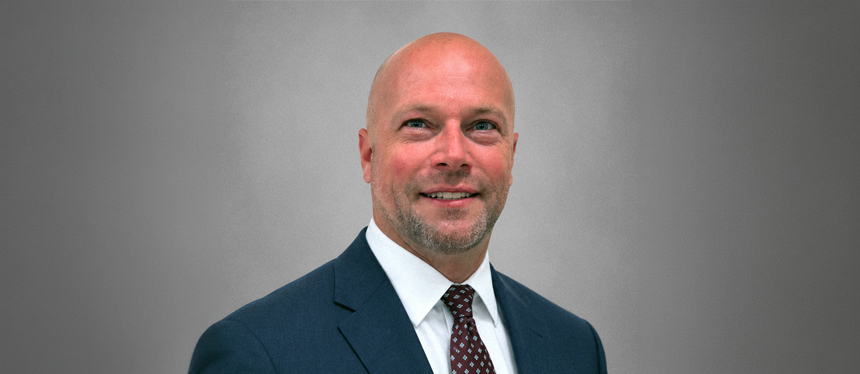
Michael Melniczuk
Michael Melniczuk , B.S. Mechanical Engineering, 2003
For more than 23 years, Michael Melniczuk has built a career as a mechanical engineer, project leader, and manufacturing consultant. He has led complex engineering and capital projects across the pharmaceutical, glass, transportation, and consumer products industries, specializing in manufacturing optimization, equipment design, project management, and operational efficiency. Throughout his career, he has managed multidisciplinary teams, delivered multimillion dollar projects, and mentored the next generation of engineering professionals.
Today, Michael continues to advance the engineering profession through engineering design and project management consulting, helping manufacturers improve facilities, processes, and operational performance. His practical, results driven approach has earned him a reputation for delivering innovative solutions while fostering collaboration across organizations.
In addition to his engineering career, Michael founded Farmers & Bankers Brewing in Woodstown, New Jersey, transforming the long vacant historic First National Bank building into a thriving brewery, coffeehouse, and community gathering place. Applying engineering principles to every stage of the project, he created a business that has helped revitalize downtown Woodstown while preserving a local landmark.
Beyond business success, Michael has made community service a cornerstone of his leadership. Through Farmers & Bankers Brewing, he supports local charities, veterans' organizations, schools, youth athletics, and numerous nonprofit initiatives, creating a lasting positive impact throughout Salem County.
Michael's career reflects the values of Rowan University's Henry M. Rowan College of Engineering technical excellence, innovation, leadership, entrepreneurship, and service.
Rowan & Roots
What inspired you to pursue engineering, and why Rowan?
I grew up in a family of mechanics. My father and grandfather owned a motorcycle dealership and raced motorcycles. They also worked on or built nearly everything needed for our home or business. I began taking my toys apart at age three and quickly moved on to working on anything mechanical, including motorcycles, by the time I was eight. I always loved working with my hands, but I wanted to understand the complexities behind how things worked. That naturally led me toward mechanical engineering.
Why Rowan? Once I decided to pursue engineering, I had to determine where I wanted to attend college. I had a few other opportunities, but having grown up in a very rural area, moving to a city felt like too extreme a change at the time. A large academic environment was also intimidating after attending a small high school. As soon as I visited Rowan, I felt at home. The smaller class sizes and hands-on approach matched my learning style. Rowan also did a great job of bringing in talented faculty members who genuinely wanted to work with students and always kept their doors open.
Do you have a favorite memory from your time at Rowan Engineering?
One of my favorite experiences was working in the mechanical engineering machine shop as a student technician. I learned a tremendous amount about machining while working with Chuck Linderman. I was also fortunate to meet many engineering students from the Classes of 2001 and 2002, which gave me early exposure to classes and projects I would encounter a year or two later. I also became good friends with many of those students.
Was there a professor or class that shaped your path?
I had two professors who made a significant impact on my development as an engineer. Dr. Eric Constans was my advisor, as well as my Machine Design and Mechanical Design professor. Those were areas in which I excelled early in my career. The other was Dr. Anthony Marchese, who taught Thermodynamics and Rocket Propulsion. His courses pushed me to work in areas of engineering outside my comfort zone, which I ended up really enjoying.
I was also fortunate to participate in NASA’s Reduced Gravity Student Flight Opportunities Program in Houston with Rowan and Dr. Marchese. We performed microgravity experiments aboard the KC-135 “Vomit Comet,” which definitely lived up to its name.
What’s the most valuable skill you learned at Rowan that you still use today?
I don’t think there is just one skill, but I would say perseverance. Our clinic projects taught us how to identify and solve real-world problems for actual businesses, often while working in multidisciplinary groups. These projects were frequently open-ended and came with real deadlines and budgets. That problem-solving experience was essential in preparing us for engineering in the real world.
What engineering problem or project have you worked on that you’re most proud of?
I’ve worked on many problems and projects across a wide range of industries. I’m most proud when I see a product in the field that I helped develop, either through its manufacturing process or the design of the equipment used to make it. Whether it is a building product, a medical or pharmaceutical product, transportation equipment, or a food and beverage product, there always seems to be something out there that I can say I had a hand in creating.
How has your career evolved since graduating? Any surprising twists?
My career has taken me into areas I never expected to work in. I started as a design engineer in the pharmaceutical glass industry, where I developed my machine design, manufacturing, and research and development skills. I then moved into production as a plant engineer, managing large teams and maintenance operations. From there, I developed into an engineering project manager, traveling extensively and taking on increasingly larger and more diverse projects.
A surprising twist came after COVID, when I decided to purchase a historic bank building in the center of the small town of Woodstown, New Jersey, about 10 miles from Rowan. I converted it into a brewery to help support the continued development of our downtown and community. Since then, I have also continued working as an engineering consultant across several industries, providing design work, project management, and manufacturing field analysis.
Engineering with Impact
What role does engineering play in creating real-world change in your industry?
In manufacturing, I believe the goal is always to deliver the best possible product to the customer while maintaining affordability, quality, and function. Engineering makes that possible by improving how products are designed, manufactured, and delivered.
What advice would you give to current Rowan Engineering students who want to make an impact?
I would tell them to observe and try as many different things as possible while maintaining an objective approach. An engineer’s primary role is to solve problems. You may use only a portion of the technical knowledge learned in your courses, but the problem-solving skills you develop in those classes will help you address challenges throughout your career.Your Engineer’s Lens
What’s something in your daily life that you now see differently because you’re an engineer?
I worked in the glass industry at several points throughout my career. Now, whenever I pick up something made of glass, I look at how it was produced—whether it was molded, pressed, or extruded. I also consider whether it was made quickly and affordably for function or carefully crafted with the meticulous quality of a piece of art.
If you could design or improve anything in the world — no limits — what would it be?
I would improve the way people work together to solve problems. Imagine if everyone spent more time trying to make the world—or even just their own community—better instead of fighting, arguing over trivial matters, or staring at their phones for hours without purpose.
Quick Hits
First engineering job:
Summer internship with Dr. Clay Gabler at Rowan, conducting laboratory research and helping design combustion experiments to support the development of safer aircraft fuel tanks.
Coffee or tea during all-nighters at Rowan?
Probably Wawa iced tea. I never liked hot drinks.
One tool or software you can’t live without today:
Probably my phone because it gives me the ability to look up information anywhere at a moment’s notice, instead of having to find a computer or locate a specialized book containing the information.
Favorite place to eat near campus back then:
Little Beef’s for a chicken cutlet sandwich, although I usually ran to Wawa for a quick snack and drink before heading straight back to the engineering building to continue working on coursework or a project.
One word that describes your engineering mindset:
Ingenuity
“I became an engineer because…”
I wanted to continually learn so I could solve problems, improve how things are done, and help make the world better.