Md Sadman Islam
Md Sadman Islam
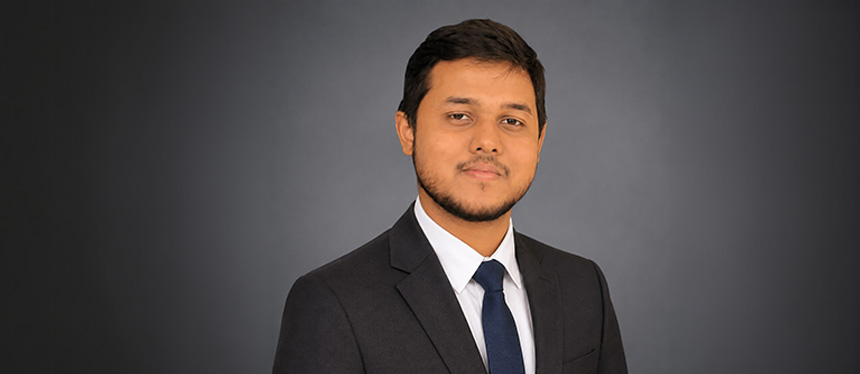
Md Sadman Islam, Ph.D. Candidate in Civil and Environmental Engineering
Engineering at the Next Level
What inspired you to pursue a graduate degree in engineering, and why did you choose Rowan University?
I grew up in a developing country named Bangladesh, where traffic crashes are very common and are one of the major causes of loss of life. From an early age, I witnessed different agencies taking various actions to reduce these crashes, but seldom did these efforts prove fruitful in reducing road fatalities due to improper assessment of the situation and a lack of thorough analysis. This intrigued me to pursue Civil Engineering during my bachelor's degree, majoring in Transportation Engineering with a focus on transportation safety.
Eventually, this motivated me to pursue a graduate program to further refine my knowledge and channel it in the right direction so that I can properly apply it to solving this major and ever-growing problem, not only in my country but anywhere in the world.
I specifically chose Rowan University because I found that the work of Dr. Mohammad Jalayer closely aligned with my interests and research goals in the field of transportation safety. Nonetheless, I also met several intelligent people online and learned about their experiences and prospects as transportation safety researchers graduating from Rowan Civil Engineering, which further motivated me to pursue my graduate degree here.
What degree and engineering discipline are you pursuing, and what is the primary focus of your research or academic work?
I am pursuing a Ph.D. in Civil and Environmental Engineering, focusing on transportation safety for large commercial vehicles and the crashes associated with them. More specifically, I am working to develop a framework that can help reduce heavy commercial vehicle-related crashes in the United States by analyzing historical crash data, existing policies, and in-field experiences.
Was there a particular experience, problem, or person that first sparked your interest in this research area?
As I mentioned earlier, my experiences of traffic crashes and the resulting loss of lives motivated me to pursue research in this field. I also lost some of my close ones in similar crashes, which further strengthened my interest in working toward improving roadway safety. However, the specific area I wanted to focus on was initially broad and undefined. After coming to the U.S., I came across numerous reports, news articles, and studies highlighting crashes and fatalities involving heavy commercial vehicles such as trucks and tractor-trailers. I realized that many of these tragic incidents could potentially be prevented through a more specific, analysis-based framework and evidence-driven policies for these large vehicles. From there, I started exploring the topic in depth and have been working toward that goal ever since.
How has your graduate experience at the Henry M. Rowan College of Engineering differed from what you expected when you began?
As I was already well aware of the Ph.D. program at the Henry M. Rowan College of Engineering before beginning my studies, my experience was largely in line with what I expected. However, I have also learned and experienced many things that I did not anticipate. I realized that pursuing a Ph.D. is not just about completing coursework and conducting research; rather, it is a journey built on hard work, motivation, perseverance, and the determination to keep moving forward despite challenges, setbacks, and successes along the way. I have also become familiar with numerous new methods, analytical approaches, and research processes while adapting to the continuously evolving research landscape, especially with the rapid advancement of artificial intelligence.
What has been your most meaningful or memorable experience at Rowan so far?
There are a couple of experiences that stand out. First, receiving the Outstanding Graduate Student Award for the Ph.D. program from the Department of Civil and Environmental Engineering in 2025 was a truly meaningful milestone in my academic journey. Second, having the opportunity to present and explain my research to the general public and school students during Rowan's Open House events over the past three years has been an incredibly rewarding experience. Sharing my passion for transportation safety and seeing others become interested in the research has made those experiences especially memorable.
Research with Impact
Can you describe your research in a way that someone outside your field could understand?
My research focuses on transportation safety by reducing crashes involving heavy commercial vehicles and improving the overall safety of their operations. Specifically, I am developing a novel framework that can help reduce driver distraction and improve seat belt compliance among heavy commercial vehicle drivers. To achieve this, I use advanced technologies and artificial intelligence to automatically detect unsafe driving behaviors and develop corrective approaches. In addition, I am working on creating a broader framework for heavy commercial vehicle safety that can help policymakers implement these recommendations in a structured and practical manner while also making the proposed guidelines easier for drivers to understand and follow.
What challenge or real-world problem is your research trying to address?
My research is intended to address the growing number of crashes involving heavy commercial vehicles and the fatal consequences associated with these crashes. These vehicles are crucial for transporting goods across the country but crashes involving trucks and tractor-trailers frequently lead to serious injuries, fatalities and financial losses. I study the major causes of these crashes, such as driver distraction and seat belt non-use, and finding data-driven real-world solutions that can help reduce the number and severity of crashes.
Why is this work important, and who could ultimately benefit from it?
First and most importantly, this research is directly related to saving lives by reducing the number of people who lose their lives on U.S. roadways every year due to human errors and preventable crashes. Although my primary focus is on improving heavy commercial vehicle safety, the outcomes of this research will ultimately benefit all road users. By reducing crashes involving large trucks and improving overall roadway safety, this work has the potential to create a safer transportation system for commercial vehicle drivers, passenger vehicle occupants, policymakers, and the public as a whole.
What stage is your research currently in, and what progress or findings are you most excited about?
I have already analyzed numerous heavy commercial vehicle crash events that occurred in New Jersey over the past decade, and I am currently collecting real-world data using a probe vehicle on New Jersey roadways to capture the actual driving environment, including crashes and near-crash incidents that are often never documented in existing datasets. This will help strengthen my findings and support the development of a comprehensive safety framework. One of the most surprising findings so far is that distraction-related fatal truck crashes are highly concentrated in specific locations and conditions rather than being evenly distributed. My research has identified high-risk highway corridors and shown that factors such as high-speed freeways, nighttime driving, younger drivers, and driver fatigue are among the strongest contributors to fatal truck crashes.
What is one research challenge you have encountered, and how did you work through it?
One of the biggest research challenges we have encountered so far is understanding the real-life, location-specific driving scenarios on New Jersey roadways. Most of the crashes we analyze are only a subset of all the safety-critical incidents that occur due to driver distraction or other non-compliant driving behaviors. While post-crash analysis helps us identify the factors contributing to crashes and develop strategies to improve roadway safety, it does not capture the numerous situations where drivers are distracted or behave unsafely but do not actually end up in a crash. These near-crash incidents are equally important because they provide valuable insights into driver behavior and help us understand what percentage of unsafe driving events eventually lead to crashes. Unfortunately, these data are rarely collected or stored in existing databases. To address this challenge, we adopted a probe vehicle approach, where we collect continuous video data while driving as a regular vehicle on New Jersey roadways. This provides a much better understanding of location-specific non-compliant driving behaviors and complements our crash analysis, ultimately leading to a more comprehensive and effective safety framework.
Have you presented, published, patented, or received funding or recognition for your work? Please share any accomplishments that are especially meaningful to you.
Yes. Over the course of my Ph.D., I have published and submitted multiple journal and conference papers in the areas of transportation safety, machine learning, and commercial vehicle safety. I have also presented my research at conferences such as the Transportation Research Board (TRB), the American Society of Civil Engineers (ASCE) International Conference on Transportation & Development, the Mid-Colonial District ITE Annual Meeting, the New Jersey Big Data Alliance Symposium, and several NJDOT and ITSNJ events. In addition, I have contributed to multiple technical reports for organizations including the U.S. Department of Transportation, New Jersey Department of Transportation, New Jersey Department of Education, and the National Academies.
Among the accomplishments that are most meaningful to me are receiving the Outstanding Graduate Student Award from the Department of Civil and Environmental Engineering, the ITSNJ Outstanding Graduate Student Award, and the Future of ITSNJ Award. I was also honored to receive the Best Poster Award at the 2025 ITSNJ Annual Meeting.
Does your research involve collaboration with other departments, universities, companies, government agencies, hospitals, or community partners?
Yes. My research involves extensive collaboration with several federal and state agencies, including the United States Department of Transportation, the National Cooperative Highway Research Program (NCHRP), the New Jersey Department of Transportation (NJDOT), and the New Jersey Department of Education (NJDOE). I also collaborate with academic institutions such as Rutgers University, the New Jersey Institute of Technology (NJIT), Cleveland State University, and The College of New Jersey.
How have those collaborations strengthened the project?
Collaborations with federal and state agencies have provided valuable policy perspectives, helping me better understand their expectations and practical needs for developing an implementable safety framework. At the same time, collaborations with academic institutions have strengthened my research by improving the analytical methods, validating the contributing factors, and enhancing the interpretation of the results.
Mentorship & Graduate Experience
How has your faculty advisor or research mentor influenced your development as an engineer, researcher, or professional?
I am grateful to my faculty advisor, Dr. Mohammad Jalayer, for guiding me throughout my Ph.D. journey by helping me understand important research questions and identify ongoing research gaps in the field. Dr. Jalayer has always been supportive whenever I needed guidance, whether for my research or professional development. He provided an environment where I could freely discuss my findings and explore new ideas while receiving valuable feedback and constructive suggestions. Whenever needed, he also connected me with other professionals in the field, which has greatly broadened my perspective and strengthened both my research and professional growth.
Are there other faculty members, lab colleagues, or collaborators who have played an important role in your graduate experience?
Yes. I am also grateful to Dr. Yusuf Mehta and Dr. Adriana Trias for serving on my dissertation committee and providing valuable feedback throughout my research. I would also like to thank Dr. Kauser Jahan for her administrative support whenever I needed assistance with conducting analyses or data collection. In addition, I am grateful to Dr. Deep Patel and Dr. Ahmed Sajid Hasan, Dr. Ruqaya Alfaris, and Md Arifuzzaman Nayeem all Rowan alumni working in the field of transportation safety, for reviewing my research and providing valuable guidance from a practical and industry-oriented perspective. Nonetheless, I am also grateful to my current lab mates, Ahmed Imtiaz Zamee, Afia Salma Ratri and Fazalay Khoda Beshal for their supports.
What technical, research, leadership, or communication skill have you developed most during your graduate program?
I have developed my presentation and communication skills by presenting my research findings to different audiences based on their backgrounds, including technical presentations at international conferences, presentations for the general public during Rowan Open House events, and academic seminars. These experiences have taught me how to effectively communicate complex research in a way that is appropriate for each audience. I have also developed my leadership skills by serving as the President of the Rowan University Institute of Transportation Engineers (ITE) Student Chapter and as the Vice President of the Rowan University Bangladesh Student Association, where I gained valuable experience in organizing events, leading teams, and collaborating with diverse groups of people.
Have you had opportunities to mentor undergraduate students, teach courses, assist in laboratories, or support other students? What have you learned from those experiences?
Yes. I have been continuously mentoring undergraduate students through the Engineering Clinic program during the Fall and Spring semesters since 2024. Over the years, I have mentored more than 10 undergraduate students by working closely with them on multiple clinic projects under the guidance of Dr. Mohammad Jalayer. I have also served as a Teaching Assistant for Water Resources Engineering and Fluid Mechanics Laboratory courses since 2025, where I assisted in teaching undergraduate students.
Through these experiences, I have learned how to explain technical concepts in a clear and understandable manner and how to prepare instructional materials that are easy for students to follow. More importantly, I have realized the value of creating an interactive learning environment where both the instructor and students actively engage in the learning process.
How have Rowan’s facilities, laboratories, resources, or industry connections supported your work?
Rowan has provided me with excellent resources and industry connections that have significantly supported my research and professional development. Being a member and later the President of the Rowan ITE Student Chapter has given me numerous opportunities to present my research at transportation engineering conferences over the years. I have presented multiple poster and technical presentations at both district- and national-level ITE Annual Meetings. In addition, I have received travel funding from the Department of Civil and Environmental Engineering and the Center for Research and Education in Advanced Transportation Engineering Systems (CREATEs), which enabled me to present my research at national conferences and interact with researchers, practitioners, and industry professionals in the field.
Beyond the Lab
Are you involved in any professional organizations, student groups, conferences, competitions, internships, or community activities?
Yes. I have been actively involved in several professional organizations and student groups throughout my graduate studies. I currently serve as the President of the Rowan University ITE Student Chapter and previously served as the Vice President of the Rowan University Bangladesh Student Association. I have regularly participated in professional conferences, including the Transportation Research Board (TRB), ITE, ASCE, ITSNJ, and NJ Big Data Alliance meetings, where I have presented both technical and poster presentations. I also served on the organizing committee for the Student Leadership Summit (SLS) 2026 as the Programming Lead during Mid-Colonial District ITE Annual Meeting held at Lancaster, Pennsylvania and have actively participated in Rowan Open House events and departmental outreach activities.
How have these experiences shaped you?It has been a learning experience on a professional and personal level. My experience as a leader in student organizations has allowed me to develop skills such as teamwork, event planning, communication and decision making.
How do you balance research, coursework, teaching, professional development, and life outside of graduate school?
I believe maintaining a healthy work-life balance is the key to staying motivated throughout any academic or professional journey. I try to divide my schedule and allocate dedicated time for research, teaching, professional development, and personal activities, while following my plan as closely as possible. Planning my tasks for the week in advance and staying committed to that schedule has been the most effective strategy for me. Besides academics, I regularly play tennis, which gives me an opportunity to relax, recharge, and maintain a healthy balance outside of graduate school.
What has graduate school taught you about persistence, problem-solving, or working through uncertainty?
Graduate school has taught me to stay motivated and take one step at a time, even when facing difficult challenges. I have also learned how to deal with problems and uncertainty throughout the research process by carefully exploring the issue, discussing it with my peers and mentors, and working toward practical solutions rather than panicking.
What advice would you give to a student considering a doctoral degree in engineering?
My advice would be to stay motivated, be proactive, and always be curious to learn. Keep yourself updated with the latest research, publications, technologies, and regulations in your field, as engineering is constantly evolving. Most importantly, be patient and persistent, because earning a doctoral degree is a marathon, not a sprint, and consistent effort over time leads to meaningful results.
Looking Ahead
What are your professional goals after completing your graduate degree?
My professional goal after completing my graduate degree is to serve as a transportation safety professional, working alongside brilliant researchers, engineers, and practitioners to improve roadway safety. I want to apply my research and technical knowledge directly to the implementation of practical, data-driven solutions and policies that can reduce crashes and save lives.
How do you hope to apply your research and graduate experience in your future career?
I want to take my research directly to the field working with professionals on transportation projects sponsored by state and federal agencies. My aim is to translate research findings into real-world safety improvements and policies that can make a real difference on the road. At the same time, I want to keep growing and refreshing my knowledge by staying up to date with the latest research, technologies and industry practices so that my work remains relevant and effective throughout my career.
Where do you hope your field of engineering will be in the next five to ten years?
As the world is rapidly changing with the advancement of artificial intelligence, the transportation sector is no exception. I believe transportation safety will increasingly rely on intelligent, AI-driven systems to monitor traffic, predict risks, and support real-time safety interventions. The pace of this transformation will be much faster than what we have experienced over the past decade, and it will extend beyond the boundaries of civil engineering by integrating fields such as artificial intelligence, data science, computer vision, and connected vehicle technologies.
What kind of impact do you hope to make as an engineer, researcher, educator, or industry professional?
I hope to make roadways safer for all users. More specifically, I want to shift the focus from simply blaming drivers after a crash to improving the engineering, technology, and policies that could have prevented the crash in the first place. I strongly believe in the Safe System Approach, which recognizes that humans will inevitably make mistakes, and that our roads, vehicles, and transportation systems should be designed to minimize the consequences of those mistakes. Through my research, I hope to reduce driver distraction by leveraging emerging artificial intelligence and intelligent transportation technologies. Ultimately, I want to encourage practitioners and policymakers to adopt these innovations and develop comprehensive safety frameworks supported by evidence-based regulations and updated transportation policies.
Your Engineer’s Lens
What is something in everyday life or in your field that you now view differently because of your graduate research?
There are both broader and more specific aspects to this. From a broader perspective, graduate research has taught me to see every problem as an opportunity to improve a system rather than as an obstacle. I also approach differing opinions as opportunities for discussion and learning instead of making immediate judgments, regardless of how different they may seem. From a transportation safety perspective, I now view roadways as living components of the transportation environment that continuously communicate with drivers through their design, pavement markings, signs, and other infrastructure. I believe that if we, as engineers, can better understand the driver's perspective, analyze historical crash data, and learn from expert knowledge and case studies, we can design transportation systems that naturally guide drivers toward safer behavior and ultimately reduce crashes.
If resources and time were unlimited, what engineering problem would you most want to solve, and why?
If resources and time were unlimited, I would dedicate my efforts to reducing roadway fatalities to zero. I would focus on improving vehicle safety, developing innovative technologies to reduce driver distraction, and advancing crash avoidance and driver assistance systems. My ultimate goal would be to create a transportation system where human mistakes no longer result in the loss of life, combining engineering, artificial intelligence, and evidence-based policies to make roads safer for everyone.
What is one misconception people often have about your research or engineering discipline?
One common misconception is that transportation safety is only about building roads or blaming drivers after crashes. In reality, it is a multidisciplinary field that combines engineering, artificial intelligence, human behavior, and public policy to understand why crashes occur and to design transportation systems that prevent human mistakes from resulting in serious injuries or fatalities
Quick Hits
Graduate degree and expected graduation year: PhD in Civil Engineering, Expected Graduate Date August, 2027
Research advisor: Mohammad Jalayer
Research area in five words or fewer: Commercial Vehicle Safety
Favorite piece of laboratory equipment, software, or research tool: Video Camera, Python
Most-used item during a long day in the lab: Computer
Favorite place to work or recharge on campus: Student Center
Best conference, class, or professional experience so far: Conference: Transportation Research Board Annual Meeting 2026; Class: Transportation System Modeling
One word that describes your approach to research: Perseverance
Complete the sentence: “My research matters because..." it saves people’s life lost in the roadways regardless of their fault.
Complete the sentence: “I chose graduate engineering because…” I wanted to transform my passion for reducing roadway fatalities into research that can create safer transportation systems and save lives