Ravi Gali
Ravi Gali
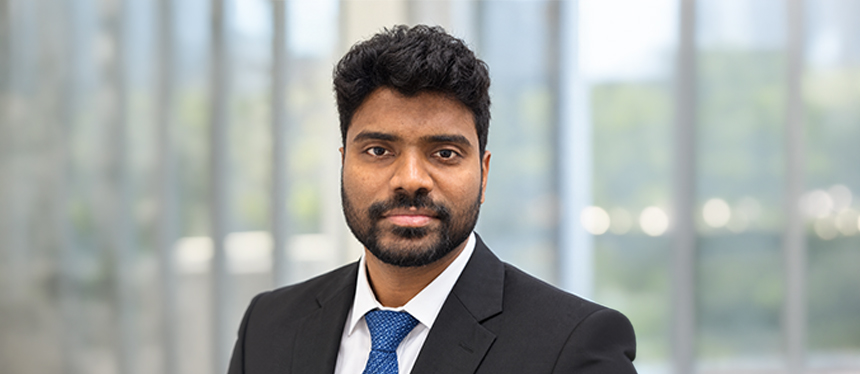
Ravi Gali, Ph.D. Candidate in Civil and Environmental Engineering
Engineering at the Next Level
What inspired you to pursue a graduate degree in engineering, and why did you choose Rowan University?
Mechanics has been a core part of my interests since my undergraduate studies. I have always enjoyed understanding why complex engineering systems behave the way they do and then translating that understanding into solutions that are both technically sound and economically feasible. That balance between fundamental engineering and practical problem-solving is what motivated me to pursue graduate research.
I chose Rowan University because of the opportunity to work on applied, high-impact research through its partnerships with the Department of War and other agencies. The combination of world-class laboratory and full-scale testing facilities, collaboration with leading researchers, and the dynamic research environment developed under Dr. Yusuf Mehta’s leadership made Rowan an excellent fit for the type of engineer and researcher I wanted to become.
What degree and engineering discipline are you pursuing, and what is the primary focus of your research or academic work?
I am pursuing a Doctor of Philosophy in Civil and Environmental Engineering. My research focuses primarily on developing insulated pavement design methodologies for cold-region infrastructure and mechanistic modeling of complex interface behavior in geogrid-reinforced asphalt pavement systems.
Much of my work lies at the intersection of field experimentation, computational simulation, and engineering design. Using data generated through Department of War-funded research, I develop numerical models and design tools that translate complex field behavior into practical engineering solutions.
Was there a particular experience, problem, or person that first sparked your interest in this research area?
What continually sparks my interest is the multiscale nature of engineering problems. Infrastructure behavior originates from interactions occurring at different scales, from material-level mechanisms to pavement layers and ultimately full-scale infrastructure systems.
I find it fascinating to understand how these mechanisms connect across micro-, meso-, and macro-scales and, more importantly, how that understanding can be translated into an engineering solution that addresses the actual problem in the field. That connection between fundamental behavior and practical application continues to drive my research interests.
How has your graduate experience at the Henry M. Rowan College of Engineering differed from what you expected when you began?
I initially expected graduate school to be primarily about developing deeper technical expertise. At Rowan, however, my experience has extended well beyond modeling and laboratory research. I have been involved in planning experiments, coordinating full-scale pavement construction, developing instrumentation systems, working with large field datasets, and translating experimental observations into numerical models and design methodologies.
That exposure has changed how I approach engineering problems. Rather than viewing experimentation, construction, data analysis, and simulation as separate activities, I have learned to see them as interconnected parts of the same engineering problem.
What has been your most meaningful or memorable experience at Rowan so far?
One of my most memorable experiences was when Dr. Arunkumar Goli and I were entrusted with constructing full-scale insulated pavement sections at the Rowan University Accelerated Pavement Testing Facility. It was a major undertaking involving the planning, installation, and management of more than 280 sensors while simultaneously coordinating construction and maintaining the integrity of the research design.
Dr. Yusuf Mehta and Dr. Ayman Ali placed significant trust in us, including supporting the instrumentation strategy we developed. Turning that plan into a successfully constructed and instrumented full-scale experiment required the entire research team to step up at critical moments.
Seeing something that began as an engineering concept and sensor plan become a physical pavement system that continues to generate research data remains one of the most meaningful experiences of my doctoral work. It also reinforced something important for me: ambitious engineering research is rarely an individual accomplishment—it depends on a team that can execute together.
Research with Impact
Can you describe your research in a way that someone outside your field could understand?
In cold regions, roads face challenges from both the environment and repeated vehicle loading. The ground beneath a pavement can freeze, thaw, expand, or lose strength, while traffic continuously applies mechanical loads from above. Together, these processes can contribute to deformation, cracking, and premature pavement failure.
My research looks at this problem from both thermal and mechanistic perspectives. We constructed full-scale pavement sections with different insulation materials and instrumented them with hundreds of sensors to understand how insulation controls heat flow through the pavement. I then use field measurements, accelerated pavement testing, and numerical simulations to understand how these changes influence pavement behavior and ultimately translate that understanding into practical design tools.
What challenge or real-world problem is your research trying to address?
My research addresses pavement deterioration associated with permafrost and seasonally frozen ground. When soil beneath a pavement freezes, it can experience frost heave; when frozen soil or permafrost thaws, it can lose strength and its ability to support traffic loads.
The challenge is not simply controlling temperature. A successful design must understand how temperature changes the condition and mechanical response of the pavement system. My research therefore combines thermal analysis with mechanistic evaluation to determine how insulation can protect the underlying soil while maintaining a pavement structure capable of carrying repeated vehicle loads.
Why is this work important, and who could ultimately benefit from it?
The Department of War maintains strategically important transportation infrastructure in cold regions, where reliable access must be maintained despite severe environmental conditions. These pavements must resist frost heave and thaw-related support loss while continuing to carry demanding traffic loads.
A major objective of my research is to develop a design methodology that helps engineers determine an appropriate insulation solution for a given climate and pavement structure. Rather than prescribing a single insulation configuration, the framework considers the environmental conditions and required level of protection to identify efficient engineering solutions.
Although developed through Department of War-funded research, the underlying methodology can also inform civilian transportation infrastructure in cold regions.
What stage is your research currently in, and what progress or findings are you most excited about?
I am currently in the final stage of my doctoral research, where we are conducting mechanistic evaluation of the constructed pavement sections using accelerated pavement testing with a Heavy Vehicle Simulator. This allows us to examine how the insulated pavement systems respond under repeated wheel loading in addition to evaluating their thermal performance.
One accomplishment I am particularly proud of is successfully constructing and instrumenting the full-scale pavement sections. The resulting measurements have allowed us to quantify how different insulation systems modify both daily and seasonal temperature behavior throughout the pavement structure.
Building on those observations, I developed a multi-climate design framework that addresses two fundamentally different cold-region problems, seasonally frozen ground and permafrost. The current mechanical testing provides the next connection: understanding whether a pavement that performs well thermally also performs adequately as a structural system under repeated loading.
What is one research challenge you have encountered, and how did you work through it?
One of the biggest challenges has been connecting fundamental behavior to a design solution that engineers can actually use. Cold-region pavement performance depends on interacting effects of thermal and mechanical mechanisms. This is because permafrost and seasonally frozen ground cannot simply be addressed using the same design criterion.
We approached the problem progressively. First, we constructed and instrumented full-scale pavement sections to observe their actual behavior. We then reproduced severe cold-region conditions using a 20-ton chiller and heat-exchange system to study their response under controlled conditions. These measurements were used to develop and validate a finite-volume thermal model.
I then automated the model to evaluate thousands of combinations of climates, pavement structures, and insulation configurations. In parallel, accelerated pavement testing is being used to investigate the mechanistic response of these systems under repeated wheel loading. Together, these efforts allow us to connect the underlying physics like heat transfer, material response, and structural behavior to a practical design methodology.
Have you presented, published, patented, or received funding or recognition for your work? Please share any accomplishments that are especially meaningful to you.
My doctoral research has been supported through Department of War-funded projects and has provided opportunities to present the work to both researchers and practitioners. I have presented research at the Transportation Research Board Annual Meeting through poster and lectern presentations and have participated in activities associated with the AKM40 committee. I have also presented at the American Society of Civil Engineers International Conference on Transportation & Development.
Publications:
- Gali, L. R. R., Goli, A., Ali, A., Mehta, Y., & Lein, W. (2026). Evaluating Thermal Characteristics of Foam Glass Aggregates as an Insulation Layer in Asphalt Pavements. Journal of Materials in Civil Engineering, 38(8), 04026252.
Apart from the above publication there are four more publications in the submission stage.
Does your research involve collaboration with other departments, universities, companies, government agencies, hospitals, or community partners? How have those collaborations strengthened the project?
Yes. A major component of my doctoral research has been conducted in collaboration with the Department of War. That collaboration has been valuable because it keeps the research connected to real infrastructure challenges encountered in cold regions.
The project also brings together expertise in pavement mechanics, materials, thermal behavior, full-scale testing, instrumentation, and numerical modeling. These different perspectives expressed in various monthly meetings have helped us examine the problem from the underlying physical mechanisms through full-scale performance and, ultimately, translate the research into design methodologies that can be used in practice.
Mentorship & Graduate Experience
How has your faculty advisor or research mentor influenced your development as an engineer, researcher, or professional?
Dr. Yusuf Mehta has had a significant influence on how I approach engineering research. One of the most important things I have learned from him is to look beyond the immediate research question and ask how the outcome can ultimately be useful to engineers and agencies.
He has also given me the independence to make technical decisions and take ownership of challenging research tasks, while holding me accountable for the outcome. That combination of trust, responsibility, and emphasis on practical impact has helped me grow from primarily thinking about the technical mechanics of a problem to thinking more broadly about research execution, implementation, and engineering decision-making.
Are there other faculty members, lab colleagues, or collaborators who have played an important role in your graduate experience?
Absolutely. Dr. Arunkumar Goli and Dr. Ayman Ali have played important roles throughout my doctoral research. I have worked particularly closely with Dr. Goli on the planning and execution of our full-scale pavement experiments, including construction, instrumentation, testing, and data collection. My committee members (Dr Wade Lein, Dr Daniel Offenbacker, Dr Benjamin E Watts, Dr Yingxiao) have pitched in various instances to give a perspective/suggestion.
My colleagues at CREATES have also been an essential part of my experience. Full-scale research cannot be accomplished by one person. There have been many situations where experiments and construction activities required long hours, extensive sensor calibration, and people stepping into different roles when needed. Those experiences have taught me the importance of having a research team that trusts one another and takes collective ownership of the work.
What technical, research, leadership, or communication skills have you developed most during your graduate program?
The skill I have developed most is the ability to take ownership of an engineering problem from beginning to end.
My doctoral work has required me to move between very different scales of engineering—from understanding fundamental material and pavement mechanics to designing experiments, constructing and instrumenting full-scale pavement sections, analyzing large datasets, developing numerical models, and translating the results into engineering design methodologies.
At the same time, managing full-scale experiments has strengthened my leadership and communication skills. I have learned that a technically strong idea is only one part of successful research. You also need to plan effectively, communicate clearly, coordinate people and resources, adapt when field conditions change, and ultimately explain why the findings matter.
Have you had opportunities to mentor undergraduate students, teach courses, assist in laboratories, or support other students? What have you learned from those experiences?
I have had opportunities to work with and support undergraduate and graduate students during laboratory testing, field instrumentation, construction, and data analysis. These experiences have taught me that mentoring is not simply about providing instructions or giving someone the correct answer. I am also assistant in CE Materials class.
I have learned to explain the reasoning behind an experimental procedure or engineering decision or concepts so that students understand what they are measuring, why it matters, and what could go wrong. Teaching someone else also forces you to examine your own understanding more carefully. In many cases, explaining a complicated concept in simple terms has helped me become a better researcher and communicator myself.
How have Rowan’s facilities, laboratories, resources, or industry connections supported your work?
Rowan’s research infrastructure has been fundamental to my doctoral work. The facilities available through CREATES and the Rowan University Accelerated Pavement Testing Facility have allowed us to move beyond small laboratory specimens and investigate engineering behavior at full scale.
We have been able to construct instrumented pavement sections, expose them to natural environmental conditions, reproduce severe cold-region conditions using a large-scale cooling system (chiller and heat exchanger system to simulate Alaska conditions), and mechanically evaluate them under accelerated wheel loading using the Heavy Vehicle Simulator.
Equally important are Rowan’s connections with government agencies, particularly through Department of War-funded research. These collaborations have given me the opportunity to work on problems driven by actual infrastructure needs rather than purely academic questions. The combination of laboratory testing, full-scale experimentation, numerical modeling, and interaction with researchers and practitioners has been one of the most valuable aspects of my graduate experience.
Beyond the Lab
Are you involved in any professional organizations, student groups, conferences, competitions, internships, or community activities? How have these experiences shaped you?
I am a member of the Academy of Pavement Science and Engineering (APSE) and the New Jersey Section of the American Society of Civil Engineers (ASCE). I also actively participate in professional conferences and technical forums related to pavement and transportation engineering.
I have presented my research at the Transportation Research Board Annual Meeting through both poster and lectern presentations and at the American Society of Civil Engineers International Conference on Transportation & Development. I have also been involved with the Transportation Research Board AKM40 committee.
These experiences have allowed me to interact with researchers, practitioners, and agency professionals who approach transportation problems from different perspectives. They have reinforced that good research does not end with obtaining results. Being able to communicate why a problem matters, defend your methodology, learn from technical criticism, and translate research findings into engineering practice is equally important.
How do you balance research, coursework, teaching, professional development, and life outside of graduate school?
For me, balance does not necessarily mean giving everything equal time every day. Graduate research has different phases, and sometimes an experiment, construction activity, deadline, or conference requires significantly more attention.
I try to prioritize based on what is most important at that particular stage while remaining disciplined about longer-term goals. Planning ahead has been especially important because full-scale experiments involve people, equipment, weather, and construction schedules that cannot always be controlled. I have learned to be flexible with the daily plan without losing sight of the larger objective.
I also think maintaining a life outside research is important. Stepping away from a problem occasionally provides perspective and often helps me return to it with a clearer approach.
What has graduate school taught you about persistence, problem-solving, or working through uncertainty?
Graduate school has taught me that research rarely progresses exactly as planned. Experiments fail, sensors stop working, field conditions change, models do not initially reproduce reality, and sometimes the original hypothesis itself needs to be reconsidered.
I have learned not to treat those situations simply as failures, but as engineering information. The important questions become: Why did this happen? What assumption was incorrect? What can still be learned from the available evidence? And what is the most defensible next step?
Persistence in research, for me, is not repeatedly trying the same approach until it works. It is to be willing to question your assumptions, change the approach when the evidence requires it, and continue working through uncertainty until you can explain the problem physically and arrive at a technically defensible solution.
What advice would you give to a student considering a master’s or doctoral degree in engineering?
Do not pursue graduate school simply because it seems like the natural next academic step. A graduate degree, particularly a Ph.D., requires a genuine interest in understanding problems for which the answer may not already exist.
Technical ability is important, but curiosity, patience, independence, and the willingness to be wrong are equally important. You will spend considerable time working on problems where neither you nor your advisor knows the answer beforehand, that is fundamentally what research is.
My advice would be to choose a research problem and mentor carefully, develop strong fundamentals, and learn to connect theory with real engineering problems. Most importantly, do not focus only on completing experiments, simulations, or publications. Try to understand why the system behaves the way it does. That understanding is what ultimately allows you to solve new problems long after graduate school is over.
Looking Ahead
What are your professional goals after completing your graduate degree?
After completing my Ph.D., I want to work at the intersection of research and engineering practice, particularly in pavement engineering, infrastructure mechanics, and computational modeling.
My long-term goal is to work on complex infrastructure problems where fundamental mechanics, field measurements, and numerical simulation can be combined to improve engineering design and decision-making. I want to continue doing technically rigorous research, but with a clear pathway toward implementation.
How do you hope to apply your research and graduate experience in your future career?
My graduate experience has trained me to approach engineering problems from multiple directions. I have worked with laboratory experiments, full-scale construction and testing, field instrumentation, large datasets, accelerated pavement testing, and numerical simulation.
I hope to carry that integrated approach into my career. Rather than relying solely on empirical observations or computational models, I want to use field evidence to understand the governing mechanisms, develop models that represent those mechanisms, and ultimately translate them into tools that engineers can use in practice.
Where do you hope your field of engineering will be in the next five to ten years?
I expect pavement and infrastructure engineering to become increasingly data-driven and computational, but I believe the underlying mechanics must remain central.
With advances in sensing, large-scale monitoring, numerical simulation, machine learning, and computing, we can characterize infrastructure behavior at a level that was previously difficult to achieve. The opportunity is to combine these capabilities with physics-based understanding rather than treating them independently.
I would like to see the field move toward design systems that continuously connect field performance, mechanistic models, and data analytics to produce more reliable and adaptable infrastructure.
What kind of impact do you hope to make as an engineer, researcher, educator, or industry professional?
I want my work to help close the gap between understanding an engineering mechanism and implementing a practical solution. Whether the problem involves pavement mechanics, cold-region infrastructure, reinforcement, or another infrastructure challenge, I want to develop solutions that are scientifically defensible, computationally robust, and practical enough to be implemented.
Ultimately, I would like my contribution to be measured not only by publications or models developed, but by whether the engineering knowledge generated through research lead to better infrastructure decisions.
Your Engineer’s Lens
What is something in everyday life or in your field that you now view differently because of your graduate research?
I rarely look at a pavement simply as a road surface anymore. I see it as a layered mechanical system continuously interacting with traffic, temperature, moisture, and the underlying ground.
A crack, deformation, or uneven surface is usually only the visible consequence of mechanisms occurring beneath the surface. Graduate research has trained me to look beyond what failed and ask a more fundamental question: What physical mechanism caused it to behave that way?
If resources and time were unlimited, what engineering problem would you most want to solve, and why?
I would like to develop infrastructure systems that can predict their own long-term performance from the conditions they actually experience. This problem fundamentally connects problems/mechanisms at various scales. Capturing such multiscale behavior demands collaboration, multiple sensors etc.
That would require integrating full-scale sensing, material behavior, environmental conditions, structural mechanics, numerical simulation, and data-driven methods into a continuously evolving representation of the infrastructure system. With the current literature, it is still far from achievable due to limitations like uncertainty in measuring mechanisms, connecting multiscale behaviors etc., there is a scope for a variety of researchers to come forward and solve this problem together.
Instead of waiting for visible deterioration and then reacting to it, engineers could understand how damage is developing, identify the mechanisms responsible, and make maintenance or rehabilitation decisions before significant failure occurs. Achieving that reliably at infrastructure scale would fundamentally change how we design and manage transportation systems.
What is one misconception people often have about your research or engineering discipline?
One misconception is that pavement engineering is primarily about selecting materials and determining how thick each pavement layer should be.
In reality, pavement performance is governed by a complex interaction between material behavior, mechanics, environmental conditions, construction, traffic loading, and the supporting ground. Even a relatively simple question such as why a pavement cracked or deformed can require understanding processes occurring across different spatial and time scales.
That complexity is what makes pavement engineering interesting to me. What appears to be a simple road at the surface is actually a continuously evolving engineering system underneath.
Quick Hits
Graduate degree and expected graduation year: PhD - Dec 2026 (Expected completion)
Research advisor: Prof Yusuf Mehta
Research area in five words or fewer: Pavement Engineering with focus on modeling domain
Favorite piece of laboratory equipment, software, or research tool: Finite Element Modeling simulations – Abaqus and Python is my favorite combination.
Most-used item during a long day in the lab: Work station
Favorite place to work or recharge on campus: SJTP CREATES office, to recharge I hangout with friends in REC center (gym or other sport events)
Best conference, class, or professional experience so far: TRB 2025 – My first international conference, Advanced pavement analysis by Prof Mehta involves a fundamentals all well covered, to how practical solutions were drafted.
One word that describes your approach to research: Impactful/fundamental
Complete the sentence: “My research matters because..." it helps practicing engineers design pavements for cold regions by determining how insulation type and thickness should be selected for different climates to protect the underlying ground from frost heave and thaw-related loss of support.
Complete the sentence: “I chose graduate engineering because..." I wanted to go beyond knowing how engineering systems work and understand why they behave the way they do, using that understanding to develop practical and economically feasible solutions to complex real-world problems.