Gabriella Pagano
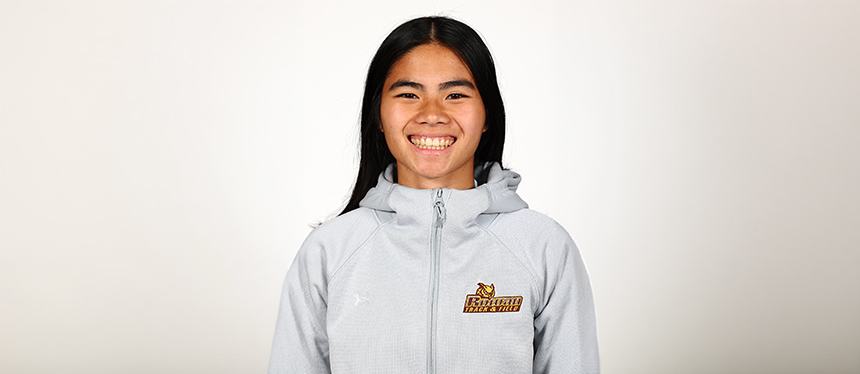
Gabriella Pagano
Gabriella Pagano, Electrical & Computer Engineering, Class of 2026
Rowan & Roots
What inspired you to pursue engineering as your major, and why did you choose Rowan University?
I chose Electrical and Computer Engineering because I've always been interested in technology and electronics since childhood. This interest was further shaped by my father and brother, both electrical engineers. My father earned his undergraduate degree from the University of Pittsburgh and a master's from Columbia; my brother completed his B.S. from Rutgers two years ago and is currently pursuing a master's degree at Georgia Tech. Beyond family influence, I'm drawn to the field's principles: understanding how things work, solving problems, optimizing systems, and building things hands-on through projects and prototyping.
I chose Rowan University for several reasons. The engineering program's strong reputation aligns with my academic goals, and the opportunity to compete in women's cross country and track & field was important to me, both for the athletic challenge and the community. As an in-state student, the affordability made it accessible. But beyond logistics, I connected with the campus itself: the engineering building and overall environment felt like where I belonged compared to the other schools I visited.
What has been your favorite memory or moment so far within the Henry M. Rowan College of Engineering?
My favorite memory so far was in Sophomore Engineering Clinic. My team was designing and optimizing a wind turbine by adjusting variables in a MATLAB simulation. After we identified the best parameters, we built the physical turbine and tested it. Our group generated the most power of any team in the class. What made this experience meaningful wasn't just the competition or the hands-on work; it was seeing the complete pipeline in action: from simulation and optimization to physical prototype and real-world testing. I learned that theory and practice aren't separate steps; they reinforce each other.
Is there a class, professor, or experience that has shaped your path or helped you find your niche?
One of my favorite courses has been Rapid Prototyping and Fabrication, taught by Michelle Frolio and Karl Dyer. The course spans the entire design pipeline, from concept to finished product. We used Altium for PCB design, learned to read schematics, assembled boards by hand, operated pick-and-place machines, soldered components, learned 3D printing, and used various lab equipment for troubleshooting. Beyond the technical skills, this class confirmed what I suspected: I am interested in hardware design and the tangible, physical side of engineering rather than software or coding.
What’s the most valuable skill you've developed in your program so far?
The most valuable skill I have learned is how to fail. Real learning happens in failure, not in perfection. When projects don't go according to plan, you're forced to adapt and problem-solve in ways that perfect outcomes never demand. For example, when a breadboard prototype doesn't work on the first try, you develop a more meticulous approach to component placement and circuit diagram reading. Similarly, designing a 3D-printed housing rarely succeeds in one iteration; you learn that refinement through multiple cycles of design, testing, and adjustment is how you actually arrive at a solution. This mindset has become foundational to how I approach engineering challenges.
Can you share a project you’re especially proud of — from Engineering Clinic, coursework, or a personal build?
During Fall 2025 clinic, I was part of the VR-based Robotic Arm Control project with Dr. Wang. I'm proud to have contributed a new user interface design that drew directly on my internship experience, and applying what I learned outside Rowan back to my coursework felt like a significant accomplishment. I designed a palm-based menu that appears on your left hand when it's facing upward, making the interface more intuitive and accessible during operation. I also completely redesigned the UI buttons because my group was encountering reliability issues; the original buttons had a detection rate below 100%, which made controlling the robotic arm inconsistent. My redesign improved the responsiveness and accuracy of user input.
Have your academic or career interests changed since your first year? How so?
Yes, my confidence in electrical and computer engineering has grown significantly since my first year. The foundational coursework, physics, calculus, and general engineering principles, felt abstract and disconnected from what actually drew me to the field. I wasn't yet seeing the hands-on, problem-solving work I was interested in. But as I progressed into ECE-specific courses and electives, everything clicked. I started designing circuits, building prototypes, and tackling real hardware challenges. Those doubts haven't disappeared entirely, but they've changed into curiosity about which areas of ECE I want to specialize in. At this point, I'm confident I chose the right major, and my focus has shifted from "Is this right for me?" to "What aspect of this field interests me most?"
Engineering with Impact
How do you see engineering making a difference in the world — and what part of that impact excites you most?
There's a saying that the future is in the hands of engineers, and I believe that's true. Engineers shape not just the technology we use, but the sustainability practices and values embedded in every product and process we design. I hope to contribute meaningfully to this responsibility, specifically by advancing more sustainable engineering practices. Whether through energy-efficient designs, sustainable materials, or rethinking how we manufacture and prototype, I want to be part of the shift toward environmentally conscious engineering.
Are you involved in any student organizations, athletics, research labs, competitions, or campus jobs? How have these shaped your experience?
I am a captain on both the cross country and track & field teams. This dual leadership role has shaped me in ways that extend far beyond athletics. It's strengthened my communication skills, learning how to connect and motivate different personalities, and celebrate wins and losses together. I have built meaningful relationships with my coaches and teammates that feel separate from, but complementary to, my engineering community. More importantly, captaincy has taught me to lead by example: showing up prepared, pushing through difficult workouts, and rising to the occasion when my teammates need stability. Beyond the athletic achievement, this role has given me a community that grounds me outside of engineering, people who challenge me differently, support me unconditionally, and remind me that I'm more than just my major.
What advice would you give to future Rowan Engineering students who want to get involved, grow, and make an impact?
I would tell incoming engineering students that the first few years are tough, but they're building a foundation that makes upperclass courses click into place. It's all worth it, but patience is essential; hard work pays off, just not always on the timeline you expect. Beyond academics, I'd encourage them to form study groups and build friendships within their major from day one. Yes, professors and office hours are valuable, but some of the best learning happens between peers. There's a reason the saying goes: you truly master a topic when you can teach it to someone else. When you help your classmates or ask for their help, everyone wins; you're both learning and reinforcing mastery simultaneously. That collaborative mindset transforms the struggle from isolating to communal.
Your Engineer’s Lens
What’s something in everyday life that you look at differently now that you’re studying engineering?
Every day, I find myself analyzing and optimizing the tasks in front of me, whether it's making my bed in the morning, cooking breakfast, or taking out the trash. I'm constantly asking: How can I do this more efficiently without sacrificing quality? This isn't just an engineer's habit; it's become part of how I naturally approach life. I'm always looking for the elegant solution, the streamlined process, the way to eliminate unnecessary steps. It's the same mindset I bring to circuit design and prototyping, but applied to everything.
If you could design, invent, or improve anything — no limits — what would it be and why?
If I could design anything without limits, I'd focus on advancing solar energy storage at scale. Solar power generation has made real progress, but the bottleneck isn't capturing the sun's energy; it's storing it efficiently and affordably for when we need it most. A breakthrough in energy storage technology would transform solar from a supplementary power source into a primary one, making renewable energy genuinely competitive with fossil fuels economically.
More broadly, though, I'm interested in redesigning how we approach product lifecycles. Too many products are designed for obsolescence or convenience, with little thought to what happens when they're discarded. I'd want to work on systems where sustainability isn't an afterthought or a marketing feature. That might mean developing new materials that safely biodegrade, rethinking manufacturing to eliminate waste, or creating circular economy models where products are genuinely designed to be recycled or reused. It's less glamorous than inventing something entirely new, but it's where I think engineering can have the most meaningful impact.
Quick Hits
First engineering-related experience at Rowan (clinic, club, job, or project): FEC Lego Duplo project
Go-to drink or snack during late-night study sessions: Chamomile tea with honey
One engineering tool, app, or software you rely on most: OverLeaf for reports
Favorite spot to study or hang out on campus: Saxby’s in the students center
One word that describes your engineering mindset: Process.
“I want to be an engineer because… the decisions we make in design shape the world."