Michael Firth
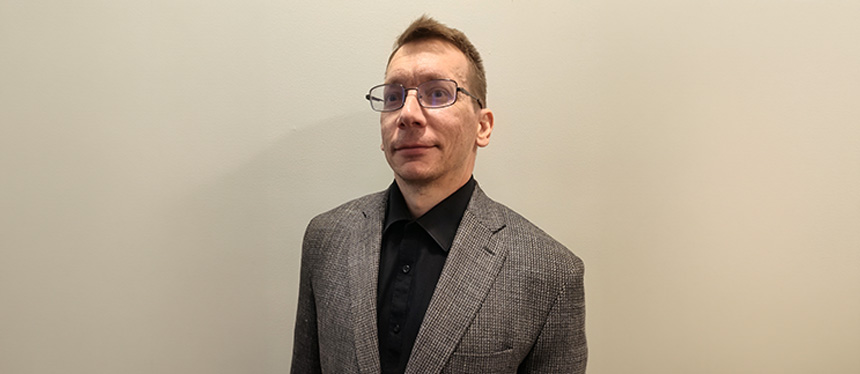
Michael Firth
Michael Firth, B.S. Mechanical Engineering, 2002
Michael Firth worked as an engineer at Lakehurst Naval Base where he resigned after more than 23 years of service. During that time, he worked as an Aircraft Carrier Catapult Test Engineer on both steam and EMALS (Electromagnetic Aircraft Launching System) catapults, Materials Engineer, and as a RAST (Recovery Assist Secure and Traverse) Engineer.
He was the recipient of the NAVAIR 2013 Air Vehicle Engineering Achievement award in the professional category, and created and ran the Lakehurst Financial Literacy Team.
A 2002 graduate of Rowan University, Mike also earned a master’s degree in Systems Engineering from Stevens Institute of Technology in 2005. He started the Michael Firth 02’ Engineering Excellence Scholarship Fund, first awarding in 2019, and was the founding chair of the Mechanical Engineering EAB (External Advisory Board) at Rowan University.
Rowan & Roots
What inspired you to pursue engineering, and why Rowan?
I had a few great teachers that definitely attempted to guide me a science or math career. Of those potential careers, engineering seemed the most fun and interesting.
I was a sophomore in high school when I first heard of Rowan. I had a friend who was looking at colleges and universities, and Rowan was on their list. When I looked into Rowan, not only did they have an Engineering program, but the financial aid package ended up being unbeatable.
Do you have a favorite memory from your time at Rowan Engineering?
Working on the engineering clinic projects each semester. Working on those projects really solidified in my mind that I had made the right choice to pursue engineering as a course of study, and as a career.
Was there a professor or class that shaped your path?
Every professor had a part to play in shaping my path, the three that stood out were Dr. Constans, Dr. John Chen and Dr. Paris Von Lockette.
What’s the most valuable skill you learned at Rowan that you still use today?
Time Management. The study of engineering at Rowan kept you very busy. You had to have a handle on your time management, or you would not be able to get everything done. This skill transfers to the workforce, and has been indispensable.
What engineering problem or project have you worked on that you’re most proud of?
I don’t know that there would be one that I could pick out. I would say that any project that directly impacted the sailors to make their job safer, easier, or faster would be the types of projects that meant the most to me.
How has your career evolved since graduating? Any surprising twists?
I worked in three different groups during my career. Each time I moved to a different group it was a bit of twist. Leaning a new skillset, while bringing the new group the some of the skills I had developed in the previous group. Learning how I could be most beneficial to the new group always seemed to hold a surprise or two. Learning that pretty much every engineering course was an “introduction” and that each subject went much, much deeper once those principles were being used outside of academia.
Engineering with Impact
What role does engineering play in creating real-world change in your industry?
Engineering plays a huge role in the defense industry. Engineering can act as a deterrent to adversaries, and can save lives that otherwise would have been lost. What’s more world changing that saving lives?
What advice would you give to current Rowan Engineering students who want to make an impact?
If you want to make an impact, you need to ask the right questions first. Stop asking yourself “What can I do?” and start asking, “What needs doing?” Once you know what needs doing, go and figure out how to do it.
Your Engineer’s Lens
What’s something in your daily life that you now see differently because you’re an engineer?
Any ship system. Knowing how much effort goes into designing, building, and maintaining or using a system on a ship, any ship is now different because of my career as an engineer. That system might be a catapult, or it might be a protective coating to protect against corrosion, so much effort goes into to those systems, and never really considered that before becoming an engineer.
If you could design or improve anything in the world — no limits — what would it be?
Education systems. Across the board, I think that too many people are excluded from an education system or don’t have access to the right education system for them to allow them to meet their potential.
Quick Hits
First engineering job:Catapult test Engineer.
Coffee or tea during all-nighters at Rowan?Neither. Soda was my caffeine delivery vehicle of choice.
One tool or software you can't live without today:Excel.
Favorite place to eat near campus back then:
Any place where I could get pizza or a sub.
One word that describes your engineering mindset:Thorough.
“I became an engineer because…”
No other potential career seemed nearly as interesting.