Amip Shah
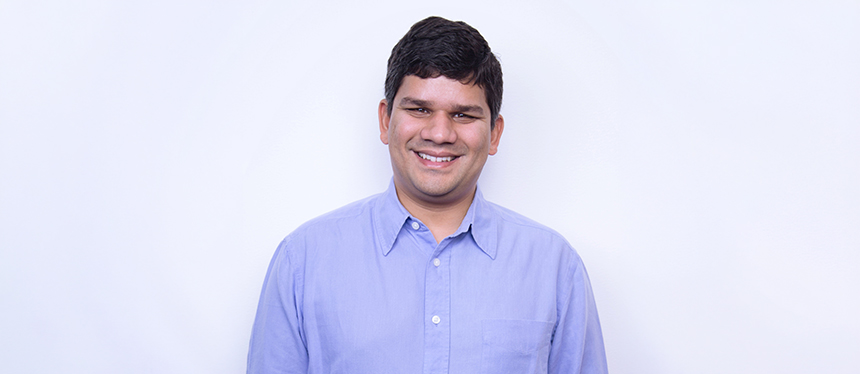
Amip Shah
Amip Shah, B.S. Mechanical Engineering, 2002
Dr. Amip Shah currently serves as Director of Technical Program Management (TPM) at Google, where he oversees the TPM organization responsible for Search Platforms – the infrastructure behind one of the world’s most widely used technology products, serving over 5 trillion user queries each year.
Previously, Dr. Shah was part of the Global Infrastructure Group at Google, overseeing elements of design, planning, and lifecycle optimization for the company’s multi-billion-dollar data center infrastructure and hardware portfolio. He has also held product and engineering leadership roles at Comfy (a start-up for digital workplace technology, acquired by Siemens) and the Hewlett Packard Company (HP), where he led research and development related to the Internet-of-Things, environmental sustainability, and energy management.
Dr. Shah has co-authored over 100 technical papers, filed 78 invention disclosures, and been granted 43 U.S. patents. He is a frequent speaker at industry and technical conferences, having delivered keynotes at events with over 1,000 attendees, and has also served as a guest lecturer and adjunct faculty at local state and community colleges. Dr. Shah was active as a volunteer with the American Society of Mechanical Engineers (ASME) for over 25 years, starting with a free ASME membership in his freshman year at Rowan University (where he went on to serve as chair of the Rowan ASME Student Section, and subsequently served in leadership roles with his local professional section, for global student and early career development, as well as technical events and content). In honor of his service to the profession, ASME awarded Dr. Shah with its Distinguished Service Award (bestowed upon less than 1% of global membership) and in honor of his technical achievements, he has been recognized as an ASME Fellow (awarded to less than 3% of global membership).
Dr. Shah received his Bachelor of Science in Mechanical Engineering at Rowan University, graduating summa cum laude with minors in mathematics and physics (receiving the Irene Elizabeth Tracey Medallion for Excellence in Engineering, the Lawson J. Brown Senior Scholarship Award for academic achievement, the ASME Kenneth Andrew Roe Scholarship for leadership, and the ASME Arthur L. Williston Medal for fostering civic service). He also holds a Master of Science, Doctor of Philosophy, and Certification in Management of Technology from the University of California at Berkeley.
Dr. Shah currently lives in California with his wife Nidhi, where he can frequently be found exploring the diverse food scene of the San Francisco Bay Area, trying out the newest neighborhood coffee spot, or reliving his childhood years playing competitive chess.
Rowan & Roots
What inspired you to pursue engineering, and why Rowan?
I grew up in a STEM family – my father was an engineer by training and my mom had graduate degrees in math and physics (she worked on the Apollo space programs with NASA and started up her own software development business in the 1980s). So looking back, I likely had somewhat of an intuitive understanding of the work that engineers did and the impact that it could have. I also went to high school in a community which valued stable career options, and – as some who had an aptitude for math, physics, and problem-solving – engineering felt like a natural choice.
Why Rowan? Our family has a bit of an intertwined history with the program! My father worked for Inductotherm (one of Mr. Henry Rowan’s companies – I even had the good fortune of meeting Mr. Rowan on multiple occasions as a child). My older brother was also a student at Rowan. And the nature of the engineering program – small classes, low student:faculty ratio, hands-on emphasis with the clinics – really resonated. Add in the benefits of the Inductotherm Scholars program, and it was just too good of an opportunity to pass up.
Do you have a favorite memory from your time at Rowan Engineering?
Launching soda-bottle-rockets across the greens! (Don’t worry, it was all supervised.) I wonder if they still have some on the roof of Wilson Hall.
Was there a professor or class that shaped your path?
Heat Transfer with the late Dr. H. Clay Gabler (who was also the advisor of our ASME Student Section). I loved the class so much that I decided to specialize in the thermal sciences for graduate school, ended up pursuing my Ph.D. at UC Berkeley (where I met my wife), and have since spent a 20+ year career in California - not to mention nearly 25 years of volunteering with ASME as well.
But more than that, Dr. Gabler was also a role model: kind, supportive, absolutely brilliant-yet-humble, and with a clear passion for what he did.
I often wonder if Dr. Gabler ever realized how profoundly he had impacted my career… and my life.
What’s the most valuable skill you learned at Rowan that you still use today?
Rather than pinpointing a single skill, I’d say it’s the mindset of a clinic project – from translating a concept into design, to coming up with a build plan, to managing schedules and trade-offs during execution, to ultimately the soft-skills that go into representing our work. That sort of end-to-end thinking was at the heart of a successful clinic project, and is honestly what I pretty much do right now, day in and day out.
What engineering problem or project have you worked on that you’re most proud of?
I was part of a project called the ‘sustainable data center’ during my time at Hewlett Packard (HP), which was about how to design and build a data center that didn’t place as much of a burden on our electricity grid. That was nearly 15 years ago, and while our work showcased the art-of-the-possible – when I look at all the challenges today around AI, data centers, and the electricity grid – I can’t help but reflect on how far ahead of our time we were.
How has your career evolved since graduating? Any surprising twists?
I never anticipated being able to work on the breadth of problems that I have… I started out doing research and development, then moved on to product, and have recently spent time in operations and delivery (which is when I moved to Technical Program Management). Over that tenure, I’ve had the chance to work on such a wide range of technologies, from data center infrastructure to renewable energy, carbon footprinting, thermal management, hardware design, sensor technology, big data, supply chain … I remember our department chair Dr. Chandrupatla saying that Rowan MechE would prepare us for "everything from A to Z, Automobiles to Zippers" and he was right!
Engineering with Impact
What role does engineering play in creating real-world change in your industry?
Where I live, in Silicon Valley, engineering is at the foundation of almost everything we do – from innovating new technologies to the engineering excellence involved in delivering products at planetary scale.
What advice would you give to current Rowan Engineering students who want to make an impact?
To quote the famous song, "don’t stop believing." When I look back to my time at Rowan, we were still a relatively unproven engineering program – I started my freshman year in 1998, even before the first engineering class had graduated – but we believed that we were part of something special. Over two decades later, I can confidently say that belief was been validated.
Your Engineer’s Lens
What’s something in your daily life that you now see differently because you’re an engineer?
In our Thermodynamics class (also with Dr. Gabler!), we always started out every problem describing what constituted the system we were analyzing, and what were the properties of its surrounding. Turns out, almost everything in the world can be viewed in this system vs surrounding context.
If you could design or improve anything in the world — no limits — what would it be?
A system for self-awareness. Technology is at a point where we have the ability to monitor so many signals, from the health of satellites that are a billion miles away to sub-nanoscale particulate behaviors. And yet, even with all of the latest wearables and other healthcare technology, the ability to monitor the human condition – including the physical, emotional and psychological transitions we are continuously experiencing – still can sometimes feel so primitive. Imagine if we could actually see infinitesimally small, imperceptible shifts in people’s feelings and emotions, in their bodies… not just individually, but collectively across larger swaths of society… we’d be able to see and address sickness and sadness at, or even before, inception. Wouldn’t that be a different world?
Quick Hits
First engineering job:A summer internship at DuPont (after my freshman year at Rowan).
Coffee or tea during all-nighters at Rowan?Coffee. Especially the French Vanilla from the 7-11.
One tool or software you can't live without today:Google Search (of course!)
Favorite place to eat near campus back then:The hoagies at WaWa. Taco Bell would have been a close second.
One word that describes your engineering mindset:Can I give you two? (i) Creativity (ii) Curiosity
“I became an engineer because…”
I wanted to have an impact on the world.